Firefly Wedding Review: The Light That Burns Out First Is the One Worth Watching
by Oreco Tachibana (ホタルの嫁入り)
This Is Not a Love Story. Not Yet.
The first time I encountered the title Firefly Wedding — ホタルの嫁入り, Hotaru no Yomeiri — I made an assumption that turned out to be entirely wrong. Something about the imagery suggested softness. A quiet romance, perhaps, with paper lanterns and wisteria. The kind of historical josei manga that arrives like a warm bath after a long day.
I was wrong in almost every direction.
What Oreco Tachibana has written is something stranger and more uncomfortable than that — a story about a young woman running calculations about her own death while deciding how to use the time she has left. A story about a man who interprets every word of a wedding vow as an absolute command and does not understand why that is frightening. A story where the most romantic gesture in the first volume is also, if you think about it for more than two seconds, deeply alarming.
And yet. By the time I put down Volume 1, I could not stop thinking about it.
That discomfort, I think, is precisely the point. Firefly Wedding is set in Meiji-era Japan, a period when the country was sprinting toward modernity while women’s legal and social circumstances were, in many respects, moving in the opposite direction. Understanding that context does not just enrich the story — it explains why a terminally ill noblewoman’s decision to propose marriage to her kidnapper is, within the logic of her world, the most rational and even empowered choice she could make.
Let me try to explain why.
A Woman Who Has Already Counted the Cost
The protagonist, Satoko Kirigaya, is the daughter of an earl — a kazoku (華族) peer in the Meiji aristocratic system — and she has a bad heart. Not metaphorically. Her heart is failing. She has been told, in the oblique, careful way that doctors delivered such news in that era, that she does not have much time.
What she does have is intelligence, beauty, and an extremely clear-eyed understanding of how those assets function within her society. She knows that for a woman of her class in Meiji Japan, marriage is not romance — it is the primary mechanism by which a daughter can secure her family’s financial and social future. She knows that her father loves her, but she also knows that love, in that era and class, was expressed through arrangement rather than sentiment. And she knows that she is running out of time to be useful.
When she is kidnapped — in circumstances the manga uses to establish the power dynamics of the world she lives in — and then rescued by an assassin named Shinpei Goto, Satoko does not wait to be told what will happen next. She proposes to him immediately.
This moment is the hinge on which the entire series turns, and if you read it as a woman desperately seeking rescue, you have misread it entirely. Satoko is not seeking rescue. She is negotiating. She has assessed the situation, calculated her options, identified the leverage point she possesses — the social legitimacy that a noblewoman’s hand in marriage would confer upon a man with no name and no standing — and she is executing a plan. In the same moment that she appears most powerless, she is actually the one controlling the frame.
That, as I will explain, is one of the most historically accurate things about this manga.
The Kazoku Trap: When Modernization Worked Against Women
To understand Satoko’s position, you need to understand the kazoku (華族) system — literally “flower clan,” though the word is better translated as the hereditary peerage established during the Meiji Restoration.
When the Meiji government dismantled the old feudal order in the 1870s, it needed to do something with the former daimyo lords and court nobles whose social authority had previously rested on military power and land control. The solution was elegant and cruel in equal measure: create a European-style aristocracy, organized into five ranks from prince down to baron, and give these families titles, government stipends, and seats in the newly created House of Peers. The old power was reconfigured into a new form, dressed in Western clothes, and told to serve the emperor.
For the women of these families, the transition was particularly complicated. On paper, kazoku women were educated — there were segregated schools, including the prestigious Gakushūin Girls’ School, where daughters of peers learned domestic arts and cultivated accomplishments appropriate to their station. But the Meiji Civil Code, adopted in 1898, formalized a legal framework that the old Confucian ethical inheritance had always implied: women were subordinate, first to their fathers, then to their husbands, then — if widowed — to their sons. A woman could not inherit the family peerage. She could not meaningfully divorce without social ruin. She could not hold property.
The cruel irony of the Meiji modernization is that it actually reduced some of the flexibility that women had possessed in the Edo period. Earlier marriage practices had been considerably more fluid, with remarriage relatively common. The new legal and social frameworks, influenced by European bourgeois family ideals, imposed a rigidity that dressed itself as civilization but functioned as a cage.
This is Satoko’s world. Smart, educated, capable — and entirely dependent on a single social institution, marriage, for any meaningful agency over her own future. The question the manga asks, in the space between her illness and her intelligence, is: what does it look like when a woman operates at the absolute maximum of the agency available to her within that system?
Hotaru: The Symbol That Knows It Is Dying
The title rewards attention. Hotaru (蛍) — firefly — is not a casually chosen image in Japanese culture. It carries centuries of specific meaning, and understanding those meanings transforms how you read the story.
In the oldest Japanese poetry — the Man’yōshū, compiled in the eighth century — fireflies are symbols of passionate love and secret longing. A firefly’s light is a signal, sent into the darkness, hoping for an answer. But the same light that signals love is also, inescapably, the light of something that does not last long.
Fireflies in Japan are creatures of high summer and clean water. They appear for a few weeks, glow for a few hours each night, and then they are gone. Japanese tradition treats this brevity not as tragedy but as a kind of concentrated beauty — the same aesthetic impulse that makes cherry blossoms (which last roughly two weeks) the most beloved flower in the country. The concept of mono no aware (物の哀れ) — the gentle sadness that arises from knowing that beautiful things are impermanent — runs through Japanese aesthetics like a river beneath every field.
There is also a Zen reading. Fireflies are used in Buddhist thought as a meditation object for the teaching of impermanence: the light that flickers, that cannot be held, that is gone before you understand you were watching it.
Satoko is a hotaru. She knows her light is going out. And the manga’s central question — which it takes volumes to even begin answering — is what a person does with that knowledge. Does she spend her remaining light signaling for love? Does she spend it fulfilling obligation? Can those two things be the same?
Shinpei, the assassin who becomes her husband, is drawn throughout the series in imagery associated with darkness and entrapment — shadow, knives, closed spaces. He catches her light. What he does not understand, at first, is that you cannot hold a firefly. The harder you close your hand, the sooner it goes dark.
The Mibōjin Problem: Widowhood as Trap and Paradox
Here is a concept that lurks in the background of Satoko’s calculations and that Western readers may not register at all: mibōjin (未亡人).
The word is usually translated as “widow,” but the literal meaning is considerably darker: “a woman who has not yet died.” The full implication is “a woman who should have died with her husband, but has not yet done so.” It emerged as a term in the late Meiji period, and its existence tells you everything you need to know about what the era expected of women.
A widow in Meiji Japan — particularly an upper-class widow — was a social paradox. She had lost her primary social function (being a wife) but was prohibited from re-acquiring it without considerable shame and practical difficulty. The expectation of the mibōjin was permanent mourning: she was to raise her children, honor her dead husband’s memory, and bring no further shame upon either the living or the dead. Remarriage, while technically possible, was socially stigmatized in ways that had not been true in earlier eras.
This is relevant to Satoko in a specific way that the manga does not spell out but that a Japanese reader feels immediately: Satoko is proposing marriage to Shinpei while knowing she will almost certainly predecease him. She is engineering her own future as a mibōjin — but with a crucial reversal. She will be the one who dies first. He will be the one left behind. In her calculation, this protects him from the shame that her illness would eventually bring to any high-status family she married into. An assassin with no family name loses nothing from a wife who dies young.
What she does not plan for is that Shinpei takes the marriage vow with an absolutism that her society has never actually practiced. He hears “I will be your wife” and interprets it as a metaphysical compact. She says it as a negotiation. The gap between those two understandings is where the psychological drama lives.
The Art of Terror and Laughter, Standing Next to Each Other
Tachibana’s draftsmanship is doing something technically demanding throughout Firefly Wedding, and I want to name it explicitly because it is easy to take for granted.
The series requires its art to contain, sometimes within the same page, genuine menace and genuine comedy. Shinpei is a man who has killed people, who has lived on the margins of legality, who responds to Satoko’s logical proposals with an intensity that is, objectively, alarming. In the hands of a less skilled artist, this character would tip entirely into threatening, making the romance feel coercive rather than complicated. Instead, Tachibana deploys visual comedy — his expressions of guileless delight when Satoko treats him as a real husband, his total bafflement at social norms he has never been taught — to keep his character on the right side of “concerning.”
The historical setting enables a visual richness that the story uses well. Meiji Japan was a period of costume collision: Western suits and bowler hats worn alongside kimono, gas lamps in streets that had been oil-lit a generation before, architecture that mixed European columns with traditional joinery. Tachibana renders this period detail with care, and it matters narratively — every visual element is a reminder that the world Satoko navigates is genuinely, disoriently in transition. Old rules and new possibilities exist in the same frame, unresolved.
Satoko herself is drawn with a physical signature that deserves attention: a large scar across her chest, the mark of past medical intervention, that she conceals from everyone except, eventually, Shinpei. In a society where physical perfection was part of what made a noblewoman marriageable, this scar is a secret vulnerability — but also a kind of honesty, a marking that her body carries that her careful social performance conceals. When she allows Shinpei to see it, it is a more intimate disclosure than anything she says aloud.
Goddess Island and the Geography of Illegality
Much of the story takes place in a location called Goddess Island — an illegal pleasure district that exists outside the normal social order of Meiji Japan. This setting functions on multiple levels simultaneously.
First, practically: it is a place where a noblewoman and an assassin can coexist without the social hierarchy constantly intruding, because everyone on Goddess Island is operating outside the legitimate social order in some way. The usual rules of kazoku rank and the protocols of respectable society are suspended.
Second, historically: the existence of such districts in Meiji Japan was a genuine phenomenon, places where the social contracts of the mainstream did not apply, where people who did not fit the new modern order of things found shelter or employment or simply existed. Shinpei’s mother was a sex worker on Goddess Island — he was born there, raised there, formed by it. He knows a social world that runs on entirely different rules than Satoko’s, and the collision of those two rule systems is part of what makes their relationship strange and interesting.
Third, symbolically: Goddess Island is a space outside ordinary time, in a sense — a place where the main narrative can develop without the constant pressure of Satoko’s social obligations intruding on every scene. When she is on the Island, she is temporarily free of the kazoku expectations that shape her identity everywhere else. This freedom is double-edged: it is also where she is most aware of how much time she does not have.
Who Should Read This
You will love Firefly Wedding if you:
- Appreciate dark romance that takes its historical setting seriously, not just as costume
- Want a female protagonist who is strategic, self-aware, and actively making choices — even constrained choices
- Are interested in the social and legal mechanics of Meiji Japan beyond the surface aesthetics
- Can hold “this character dynamic is disturbing” and “this character dynamic is compelling” in your mind at the same time
- Liked The Apothecary Diaries’ combination of female intelligence and historical constraint, but want something with more psychological edge
- Find yourself drawn to stories where the question of what love means under impossible conditions is taken seriously
- Are excited by the upcoming David Production anime adaptation (October 2026, Fuji TV’s Noitamina block) and want to read ahead
You might struggle with Firefly Wedding if you:
- Need your romance to feel safe and unambiguous from the start — Shinpei’s devotion is genuine but disquieting, and the manga does not smooth that over
- Want a fast-moving plot; Tachibana is interested in atmosphere and interiority, and the pacing reflects that
- Prefer protagonists who express their feelings directly — Satoko operates almost entirely through implication, negotiation, and strategic understatement
- Are looking for action sequences or high-stakes physical confrontation to drive the narrative
Verdict
There is a version of this story that would be easier to write and easier to read — one where Satoko’s terminal illness is a pure tearjerker device, where Shinpei’s obsession is straightforwardly romantic, where the Meiji setting is beautiful background rather than a structural argument. That is not the manga Oreco Tachibana wrote.
What Tachibana wrote is more interesting and more uncomfortable. Firefly Wedding takes the premise of a woman with limited time and limited options and asks, seriously, what maximum female agency looks like within those constraints. The answer it arrives at — a woman who refuses to be merely acted upon, who turns her desperation into leverage, who chooses her own terms even when her terms are narrow — feels genuinely earned and genuinely Japanese in a way that I cannot fully articulate but that I recognize.
Satoko is not a feminist icon in any straightforward sense. She is not fighting the system; she is navigating it with exceptional skill. But there is a kind of radical pragmatism in her choices that feels, to me, more honest about how change actually happens within oppressive structures than a more heroic narrative would be. She cannot overturn the Meiji Civil Code. She can decide who she marries, and why, and on what terms.
The series has 3 million copies in circulation and has been recognized with major awards — the Tsutaya Comic Award and the NTT Solmare Denshi Comic Taishō grand prize, among others. It finished its main serialization in February 2026 after three years on Shogakukan’s MangaONE platform. The announcement of a David Production anime (the studio behind JoJo’s Bizarre Adventure and Cells at Work!) for October 2026 is well-deserved recognition of a manga that has consistently done more than its premise promises.
Rating: 9/10
The one point I hold back is for the pacing in the early middle volumes, which occasionally indulges in atmosphere at the expense of momentum, and for Shinpei’s character, who requires a certain patience from the reader before his devotion becomes genuinely moving rather than primarily alarming. Both of these are real limitations for some readers, even if they are also, in some sense, part of what makes the series distinctive.
I keep thinking about the image of a firefly — the way its light is most beautiful in the moment before it goes dark, the way the people who love fireflies know from the start that they are watching something that will not last. Is the knowledge of ending what makes the watching precious? Or does it make it unbearable? Satoko has chosen her answer. I am not sure I have.
Firefly Wedding, Vol. 1 is available in English from VIZ Media. If you pick it up via the link below, a small commission supports Tokyo Manga Shelf at no extra cost to you.
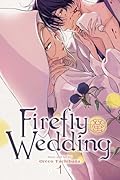
 Firefly Wedding, Vol. 1 View on Amazon
 * As an Amazon Associate, I earn from qualifying purchases.